
Blog
It Got Harder Right Before God Moved: Faith, Worship, and Standing Firm
Published · Last updated · 5 min read
There are moments in life when doing the right thing seems to make everything worse before it gets better.

There are moments in life when doing the right thing seems to make everything worse before it gets better. If you have ever stood up for something true and felt the weight of the pushback, you are not alone. The story of Moses and Pharaoh in Exodus 5 speaks directly to that experience, and it carries a message that is just as relevant today as it was thousands of years ago.
What Does Exodus 5 Have to Do With My Life Today?
In Exodus 5:1, Moses and Aaron walk boldly before Pharaoh and declare, "Thus says the Lord, the God of Israel, 'Let my people go, that they may hold a feast to me in the wilderness.'" - Exodus 5:1 English Standard Version (ESV)
Moses was not a polished speaker. He stuttered. He was not the obvious choice for a spokesperson. Yet God chose Him anyway. That is worth sitting with for a moment. God does not always call the most eloquent or the most confident. He calls the willing and speaks through them in ways that defy expectation.
Pharaoh's response was swift and harsh. Not only did he refuse to let the people go, he made their work harder. He took away the straw they needed to make bricks and demanded they produce the same number of bricks as before. The moment Moses spoke up, things got worse.
Why Did God Tell Moses to Ask for Worship First?
Here is something that might seem puzzling at first. Moses did not go to Pharaoh and say, "Let my people go so they can be free." He said, "Let my people go so that they may worship." That distinction matters deeply.
Pharaoh understood something that we sometimes forget. Worship declares who owns you. A people who worship God remember that there is a power greater than any system, any institution, or any authority on earth. Worship is not just a Sunday morning activity. It is a declaration of identity.
God wanted to move their minds before He moved their bodies. Freedom without a foundation leads to wandering. Before He could lead them out, He needed them to know who they belonged to.
How Systems Try to Replace Worship With Work
There is a fascinating detail in the original Hebrew text. The same root word is used for both forced labor and for worship. Pharaoh was essentially saying, "Serve me with bricks." God was saying, "Serve me with worship." Both demanded devotion. The question was always: who would they give it to?
Systems, whether ancient or modern, tend to demand everything and give back very little. They ask people to produce more with fewer resources. They reward busyness and punish rest. They measure worth by output.
And when someone steps away from that cycle to worship, to rest, to reconnect with God, the system calls them lazy. Exodus 5:8 says it plainly: "But the same number of bricks as they made before you shall require of them, for they are idle. Therefore they cry, 'Let us go and offer sacrifice to our God.'" - Exodus 5:8 English Standard Version (ESV)
The moment the Israelites asked to worship, they were labeled as lazy. That pattern has not changed much.
Why Worship Is Different From Every Other Activity
Community can happen in a lot of places. People connect at work, at school, at sporting events, in neighborhoods. But worship is different for one specific reason: it is the only place where we are not looking at each other or measuring each other. We are looking at God.
Nobody is producing anything in worship. Nobody is climbing a ladder. Worship is where the branch reconnects to the vine. And when that connection is cut, things begin to die slowly, sometimes physically, sometimes mentally and spiritually.
Worship moves people:
From despair to hope
From doubt to faith
From anxiety to peace
From "I can't" to "God can"
From counting what was lost to remembering who we belong to
The Psalms capture this beautifully: "You have turned for me my mourning into dancing; you have loosed my sackcloth and clothed me with gladness." - Psalm 30:11 English Standard Version (ESV)
What Happens When You Keep Speaking the Truth and Nobody Listens?
Moses did not say it once and give up. He went back to Pharaoh again and again. Each time, the resistance was real. Each time, the cost was real. But he kept going back.
There is a pattern here for anyone who has ever spoken truth and been dismissed, ignored, or punished for it. The answer is not silence. The answer is to stay connected to God and keep saying what needs to be said.
Fannie Lou Hamer is a powerful example of this. She went to register to vote and was thrown off the plantation where she had worked for eighteen years. She was shot at. She was beaten in a jail cell so severely that she carried the physical effects for the rest of her life. But she kept speaking. She kept singing. She kept showing up. And eventually, she walked onto the floor of the Democratic National Convention as a delegate. Her headstone reads: "I'm sick and tired of being sick and tired."
She kept saying it.
What John Wesley Knew About Staying the Course
John Wesley, at 87 years old and near death, wrote a letter to William Wilberforce, the young member of parliament who was fighting to end slavery. His words carry weight for anyone who feels worn down by opposition:
"Unless God has raised you up for this very thing, you will be worn out by the opposition of men and devils. But if God be for you, who can be against you? Are all of them stronger than God? Oh, be not weary of well doing."
That is the Methodist tradition at its core. It is not just believing the right things. It is doing the right things, persistently, even when it costs something.
Speaking Up Is Not Optional
We live in a culture where a lot of words are spoken but very little is actually said. There is a difference between talking and saying something. Saying something means standing for someone. It means doing justice for those who cannot do it for themselves. It means using whatever platform, position, or voice you have been given to speak truth, even when the system pushes back.
Romans 8:31 asks the question that anchors all of this: "What then shall we say to these things? If God is for us, who can be against us?" - Romans 8:31 English Standard Version (ESV)
The answer is not that opposition disappears. The answer is that opposition does not win.
Life Application
This week, make worship non-negotiable. Not as a religious obligation, but as a deliberate act of reconnecting to the One who gives you your identity, your strength, and your direction. Let worship be the thing that prepares you for the week ahead, not the thing you fit in when everything else is done.
Beyond that, consider where you have gone quiet. Is there something true that needs to be said in your home, your workplace, your community? Is there someone who needs you to stand with them? The challenge this week is to reconnect with God in worship and then take that strength into one place where your voice is needed.
Ask yourself:
Have I allowed the demands of work, productivity, or busyness to crowd out my time with God?
Is there a truth I have stopped speaking because the pushback was too hard?
Who in my life or community needs me to say something on their behalf?
Do I truly believe that God is moving, even when things seem to be getting harder?
It got harder right before God moved. That is not a reason to stop. That is often a sign that you are exactly where you are supposed to be.
Exodus 5 Devotional: It Got Harder Right Before God Moved
Exodus 5 Devotional: It Got Harder Right Before God Moved and What Keeps You Standing Until God Moves
Exodus 5 Devotional: It Got Harder Right Before God Moved · October 2026
Amazing family,
When doing the right thing makes life harder, what keeps you standing until God moves?
This week, we focused on Exodus 5:1-9. Moses and Aaron went to the Pharaoh and said, "Thus says the Lord, the God of Israel: Let my people go, so that they may celebrate a festival to me in the wilderness." Pharaoh refuses, takes away the straw needed to make bricks, demands the same number of bricks anyway, and calls them lazy for asking. But look closely at what God asked for. He didn't ask for their freedom first. He asked for time to worship, because worship reminds us who we belong to.
Moses didn't stop after the first no. He went back to Pharaoh again and again. Fannie Lou Hamer knew that kind of persistence. When she registered to vote in 1962, she was forced off the Mississippi plantation where she had worked for 18 years. Night riders shot into the house where she'd been staying, and a year later police had her beaten in a Winona jail. But she kept speaking up. In 1964 she asked the whole country, "Is this America?" And four years later, she walked onto the Democratic National Convention floor as a delegate.
Through it all, she kept singing "This Little Light of Mine," in the meetings and on the road when it was dangerous. Her worship kept her standing long enough to see God move.
So let's walk through this week's devotional one day at a time. Start with Day 1 today and come back to the next one tomorrow. Each day pairs a scripture with a prayer for the place you're standing in right now. If you've gone quiet somewhere, or the week has taken your time with God, this is a good place to start again.
WATCH THE FULL MESSAGE
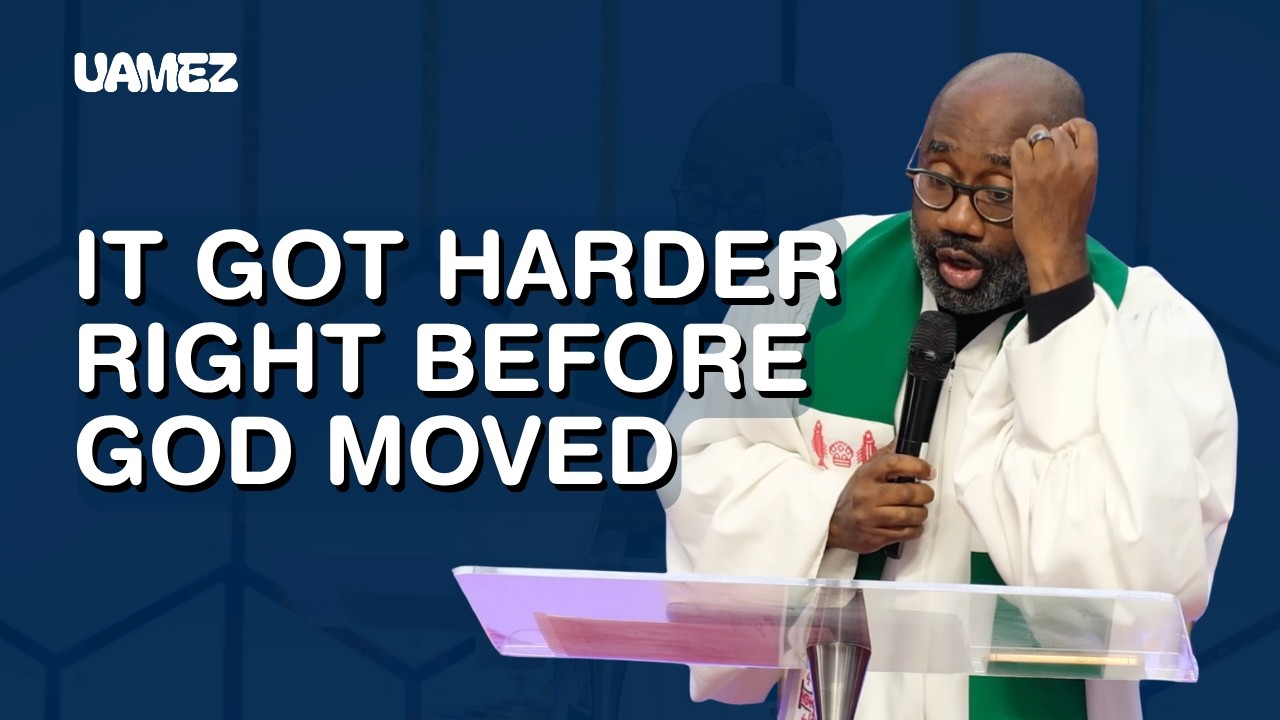 Watch the videoOpens in a new tab
DAY 1 - Bricks Without Straw
Exodus 5:7 · NRSVUE
"You shall no longer give the people straw to make bricks, as before; let them go and gather straw for themselves."
Moses did exactly what God told him to do. He carried God's message into Pharaoh's court, and by the end of that same day the people had more work than before. Pharaoh stopped supplying the straw and kept the brick count right where it was, so now they had to go find their own straw and still hit the same number.
How many of us, if we're honest, have read a week like that as proof we got it wrong? You told the truth in the meeting, or you finally said no to something, and the pressure went up instead of down. In Flint, Michigan, Dr. Mona Hanna-Attisha showed that the share of children with high lead levels had nearly doubled after the city switched its water. State officials went on record saying she was slicing and dicing numbers. She kept on talking anyway.
Pushback is a poor way to measure whether you heard God right. Pharaoh's harder orders were the first chapter of a story that ends with the sea opening. When the week gets heavier right after you did the faithful thing, you may be closer to God moving than you've ever been.
"It got harder right before God moved."; Pastor Kaloma Smith
Reflection
When things got harder right after you made a faithful choice, what did you decide that difficulty meant?
Prayer
Lord, when doing the right thing costs me more than I expected, keep me from reading the pressure as Your absence. Moses heard You right, even when Pharaoh made it harder, and I want that kind of confidence. Give me the patience to keep standing long enough to see You move. I trust You with the part I can't see yet. Amen.
DAY 2 - Who Owns You
Exodus 5:1 · NRSVUE
"Afterward Moses and Aaron went to Pharaoh and said, 'Thus says the Lord, the God of Israel: Let my people go, so that they may celebrate a festival to me in the wilderness.'"
Read God's message slowly. Before any talk of the promised land, God asked Pharaoh for a festival in the wilderness, a stretch of time for His people to worship Him. Pastor said this puzzled him as he studied it, because everybody remembers "let my people go" and skips right past the reason God gave.
Pharaoh understood exactly what was at stake. As long as the people spent every hour making bricks, they belonged to him. Worship would remind them they belonged to somebody else. God had to move their minds before He moved their bodies, because a people who forget who they belong to can walk out of Egypt and still wander.
We carry a lot of titles. Engineer, doctor, lawyer, banker, mother, father. Those titles are real, and each one will ask you for everything you've got. Pastor's warning was that we've let every title but child of God become the important one. Worship is where you hear the older name first, and the rest of the week has to fit underneath it.
"Pharaoh cares because worship tells you who owns you."; Pastor Kaloma Smith
Reflection
Which title in your life has started to feel like the truest thing about you, and what changes when you put "child of God" in front of it?
Prayer
Father, I belong to You before I belong to any job, schedule or expectation. When my titles start talking louder than You do, call me back by name. Move my mind before You move my circumstances, so I know who I am when You lead me out. Amen.
DAY 3 - Called Lazy
Exodus 5:8 · NRSVUE
"But you shall require of them the same quantity of bricks as they have made previously; do not diminish it, for they are lazy; that is why they cry, 'Let us go and offer sacrifice to our God.'"
The moment the Israelites asked for time with God, Pharaoh had a word ready for them. He didn't argue about worship or debate whether their God was real. He called them lazy, and then he raised the workload to prove his point.
Pastor told the young people in the room to hold on to this one, because the world will do it to them too. Step away to worship and something will call it lazy. Sometimes it's a boss. Most of the time it's the voice in our own heads. We can't find time to pray in the morning, but the minute the phone pings, we answer the email. Israel had plenty of busyness and nothing for God.
Time with God doesn't run on the same clock as time at work. In worship nobody is producing anything and nobody is being measured, because the whole room is facing God. That hour you protect is the one place in the week where you stop making bricks, and it's exactly where Pharaoh loses his grip on you.
"The second you don't worship them, whatever else you do, they will call you lazy."; Pastor Kaloma Smith
Reflection
When your time with God and your inbox compete, which one usually wins, and what would it take to protect one hour this week?
Prayer
God, forgive me for answering every ping before I answer You. When the world calls my rest lazy, help me hear Your invitation louder. Teach me to guard my time with You as something sacred, not something I squeeze in after the bricks are done. Amen.
DAY 4 - Back on the Vine
Psalm 30:11 · NRSVUE
"You have turned my mourning into dancing; you have taken off my sackcloth and clothed me with joy."
Pastor made a claim on Sunday that's easy to skim past. When a people get cut off from God, they get weaker. He said that if we connect back with God and get back into His house, we root ourselves back into the same power that walked us out of Selma and out of Montgomery.
A branch cut off from the vine doesn't die all at once. It dries out slowly. Some of us know that feeling. Nothing dramatic happened. Sunday turned into a maybe and prayer turned into a someday, and one morning the anxiety at 2 a.m. has more say in your life than God does.
The good news is that it works in reverse. Worship moves you from despair to hope and from doubt to faith. It moves you from that 2 a.m. anxiety to a peace that doesn't make sense on paper, and from counting what you lost to remembering who you belong to. The psalmist knew it too. God turned his mourning into dancing.
"If being disconnected makes us weaker, coming back makes us stronger."; Pastor Kaloma Smith
Reflection
Where have you drifted from worship or community, and what is one step back you could take this week?
Prayer
Lord, I have let some things dry out. Put me back on the vine and let me draw strength from You again. Turn my mourning into dancing the way You did for the psalmist, and the way You did for the generations who walked before me. Amen.
DAY 5 - Keep Saying It
Romans 8:31 · NRSVUE
"What then are we to say about these things? If God is for us, who is against us?"
Moses said it the first time and Pharaoh made things worse. So he went to God, and then he went back and said it again, and again after that. Pastor joked that the first time they don't hear you, they're hard of hearing, and by the fourth time they're just ignoring you. If you're saying the right thing and standing in the right place, you keep saying it.
John Wesley knew this. At 87 and dying, he wrote to William Wilberforce, the young member of Parliament fighting slavery: "Unless God has raised you up for this very thing, you will be worn out by the opposition of men and devils. But if God be for you, who can be against you? Are all of them stronger than God?" Wesley was quoting this same verse to a man who felt outnumbered.
We live in a culture where people talk a lot and say nothing. Saying something costs you, because it means standing for someone at work or in front of a city council when the system would rather you stayed quiet. Romans 8:31 doesn't promise the opposition will disappear. It promises the opposition doesn't get the last word.
"Is there anybody in God's house that's going to keep saying it?"; Pastor Kaloma Smith
Reflection
Is there something true you've stopped saying because the pushback got too heavy, and who would it help if you said it again?
Prayer
God, give me the courage to say what needs to be said and to stand where You are calling me to stand. When I'm tired of saying it, remind me that You are for me. Let me speak for the person who can't speak for themselves this week. Amen.
A Prayer for the Week Ahead
Lord, this week You showed us what Pharaoh does when Your people ask to worship. He takes the straw and calls us lazy for asking.
Thank You that the harder orders were never the end of the story. Move our minds before You move our bodies, and remind us who owns us when the week starts making its demands.
Give us the nerve Moses had to go back one more time, and the song Fannie Lou Hamer kept singing on dangerous roads.
The same power that walked our grandparents out of Selma and Montgomery is still Yours to give. Let us keep saying it, so the children coming after us inherit a church that never went quiet.
Amen.
The Conversation Continues
Bring somebody who has gone quiet lately. We'll see you Sunday at 10am, 3549 Middlefield Rd in Palo Alto.
3549 Middlefield Rd, Palo Alto · Sundays at 10:00 AM
Grace and peace,
Pastor Kaloma