
Where did it begin?
In Mrs. McCaw's home at 330 Cowper Street. The young congregation also gathered at Fraternal Hall at 140 University Avenue and later at Ostrander Hall.
Our story / Palo Alto since 1918
UAMEZ Church began in 1918, when a small group of Black believers met in Mrs. Melvina McCaw's home at 330 Cowper Street to start an A.M.E. Zion church in Palo Alto. They built a church on Ramona Street and moved to Middlefield Road in 1966, where the church still worships every Sunday.
The beginning
The founders named in the historical record include Jennie Moore Bass, Maude Natis, and Isaac McDuffy, along with Mrs. Melvina McCaw, in whose home the church began. The church ledger names five founding Trustees who pledged the mortgage: Hinson, Jones, Natis, Moore, and Dotson.
Our name is University African Methodist Episcopal Zion Church. Our roots are part of the story we share with everyone who walks in.
Places that held us
From a living room to a church home on Middlefield Road, this is a story of people who kept showing up for one another.
In Mrs. McCaw's home at 330 Cowper Street. The young congregation also gathered at Fraternal Hall at 140 University Avenue and later at Ostrander Hall.
With help from townspeople, the church at 819 Ramona Street was built in 1924 and dedicated on April 5, 1925.
During the Depression, banks collected donations and other churches held fundraisers to help UAMEZ avoid foreclosure. Its $6,000 mortgage was paid off by 1939.
For about forty years, the Ramona Street church was the center of Black Palo Alto. It housed Black social clubs, the Garden City Women's Club, and a local NAACP chapter.
The new home at 3549 Middlefield Road was built.
The congregation moved in. Middlefield is now the church's longest home.
The old Ramona Street church was saved from demolition and restored for new use. It was determined eligible for the National Register and is listed on the California Register.
Rev. Kaloma A. Smith became pastor.
The National Trust for Historic Preservation gave UAMEZ $400,000 to restore the Middlefield campus.
More than a building
For about forty years, the Ramona Street church served as a center of Black Palo Alto. Black social clubs, the Garden City Women's Club, and a local NAACP chapter found space there.
Our wider family
UAMEZ belongs to the A.M.E. Zion Church, which began in New York in 1796, became independent in 1820, and elected James Varick as its first bishop in 1822. It earned the name Freedom Church in the fight against slavery. Frederick Douglass, Sojourner Truth, and Harriet Tubman were connected to it.
Read what we believe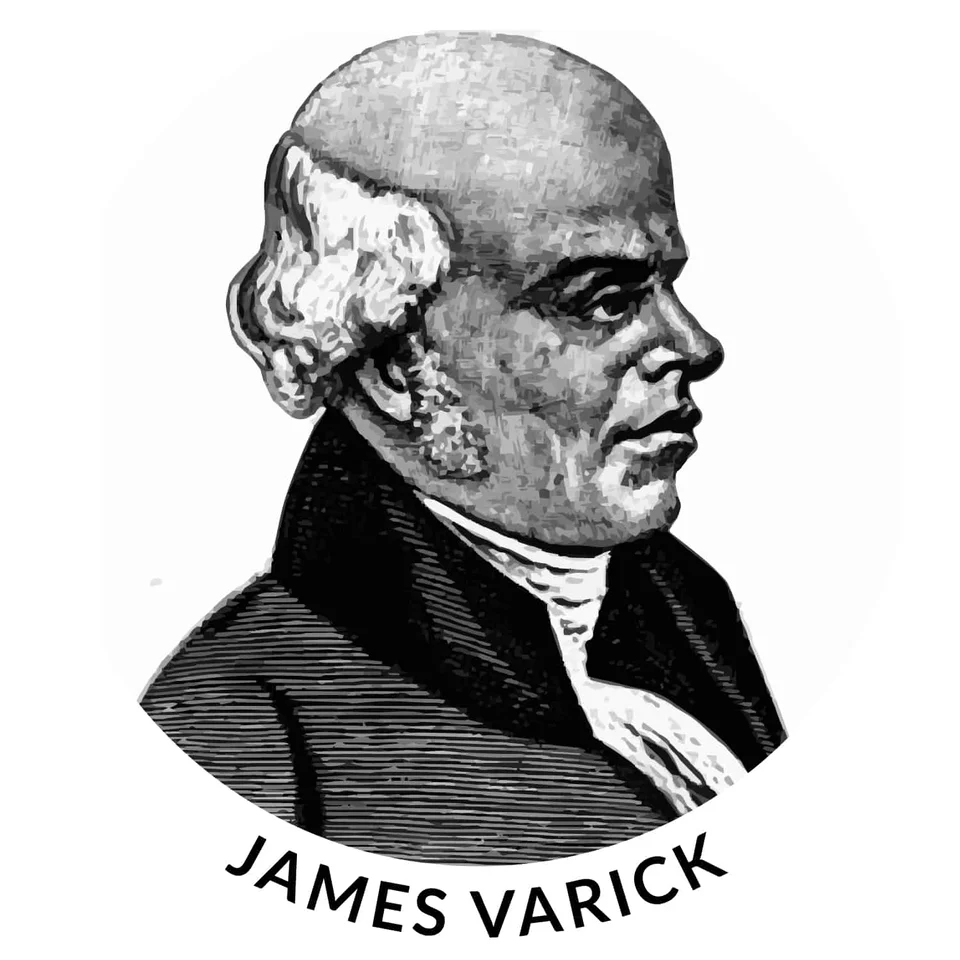
Image source: The A.M.E. Zion Church: About (opens in a new tab).
A living inheritance
The same church still meets every Sunday at 10:00 AM.
You do not need to know this whole history before you walk through the door. There is room to become part of what comes next.
See what is planned for our campusOur wider family / the Freedom Church
Adapted from the account by Kaloma Smith ·
From Black Methodists in New York to a congregation in Palo Alto, this is a history of faith, freedom, education, and community.
1796 / a beginning in New York
The African Methodist Episcopal Zion Church is a Black Methodist denomination that began in New York City in 1796. Black members of John Street Methodist Episcopal Church faced segregated seating, had to wait until white members finished before receiving communion, and were excluded from preaching and leadership. They kept the Methodist faith and sought freedom to worship as equals.
In August 1796, Francis Jacobs, William Brown, Peter Williams, Abraham Thompson, and June Scott asked Bishop Francis Asbury for permission to meet separately. He agreed. They rented a house and gathered on Sunday afternoons and Wednesday evenings until 1799, with Thompson, Scott, and Thomas Miller preaching. James Varick, a shoemaker and lay preacher, was part of that early group.
Peter Williams Sr. had been enslaved. John Street's trustees bought his freedom in 1783, and he repaid them over two years while working as the church's sexton. He later built a tobacco business and laid the cornerstone of Zion's first church. Varick, born in Newburgh to an enslaved mother, would become Zion's first bishop and is honored as its founding father.
1800–1848 / independence
By 1799, the congregation had outgrown its rented house and taken the name Zion, after the city of God. Trustees raised money and began building a church in autumn 1800. In February 1801 they signed a New York State charter as the African Methodist Episcopal Church in the City of New York.
The Methodist Episcopal Church's New York Conference would not ordain Black preachers. Zion's trustees ran the church while an elder from John Street administered the sacraments, an arrangement that continued until 1820.
In October 1820, Zion published its first Book of Discipline and became independent. In July 1822, three elders who had left the Methodist Episcopal Church ordained Abraham Thompson, James Varick, and Leven Smith. Zion then elected Varick as its first bishop. “Zion” was formally added to the name in 1848, preserving the congregation's historic name and distinguishing it from the AME Church in Philadelphia.
Faith against slavery
Before the Civil War, AME Zion congregations in New York, Pennsylvania, and New England sheltered people escaping slavery and preached against it from the pulpit.
That history is why AME Zion carries the name Freedom Church.
After the Civil War
Missionaries such as James Walker Hood followed the Union army into North Carolina and organized congregations among newly freed people. Hood later became a bishop and led much of that growth. North Carolina remains central to the denomination, whose headquarters is in Charlotte.
Education grew alongside the churches. In 1879, AME Zion founded Zion Wesley Institute. It moved to Salisbury, North Carolina, and became Livingstone College under its first president, Joseph Charles Price, a prominent Black orator. Livingstone remains the denomination's flagship college, with Hood Theological Seminary nearby.
1894 onward / women in ministry
Julia A. J. Foote became AME Zion's first woman deacon in 1894, in her seventies, after decades of traveling as a preacher. Mary J. Small became a deacon in 1895 and, in May 1898, the denomination's first woman elder. The Star of Zion describes her as the first woman to hold elder's orders anywhere in Methodism. Foote became the second woman elder in 1899.
Small's ordination under Bishop Calvin C. Pettey faced opposition. After ministers requested a hearing, she was approved by a vote of 24 to 13. The controversy continued from 1898 to 1900, but the ordinations stood.
Women now serve as bishops, including Bishop Melanie Rogers Miller of the Western Episcopal District.
The 20th century / civil rights
During the Great Migration, AME Zion planted churches as Black families moved from the South to cities in the North and West. Mother AME Zion, descended from Varick's first congregation, moved to Harlem and completed its West 137th Street building in 1925. Rev. Benjamin Robeson pastored there, and his brother Paul Robeson remained connected to that pulpit.
In 1925, Bishop William Jacob Walls staged a three-hour sit-in at Union Station's segregated dining room in Washington, D.C., decades before the Montgomery bus boycott.
In Montgomery, Rev. Solomon Seay of Mt. Zion AME Zion led early campaigns against injustice from 1948 to 1952. On December 5, 1955, Rev. L. Roy Bennett hosted the meeting at Mt. Zion that formed the Montgomery Improvement Association. It elected 26-year-old Martin Luther King Jr. president and Bennett vice president. The boycott continued for more than a year, ending in December 1956 after segregated bus seating was ruled unconstitutional.
Selma marchers rested at Mt. Zion in 1965. Its pastor, Rev. Percy Smith Jr., became the first Black man to run for mayor of Montgomery. The old church building was listed on the National Register of Historic Places in 2002.
Coretta Scott King was born into the AME Zion Church.
1918 onward / our place in the story
Founded in 1918 as the first African American church between San Mateo and San Jose, UAMEZ carries this tradition west. It belongs to the Western Episcopal District under Bishop Melanie Rogers Miller.
The first 22 members gathered at Fraternal Hall at 140 University Avenue. Townspeople helped fund the Ramona Street church, built in 1924 and dedicated on April 5, 1925. Later trustee Ruth Anne, a founder's granddaughter, came from a family that had arrived in Palo Alto in 1887, before the city or Stanford existed.
The church faced racism locally. In 1920, the Chamber of Commerce called for a segregated district for Asian and Black residents; Henry Dodson of the Colored Citizens Club of Palo Alto answered publicly. In May 1946, someone painted a Ku Klux Klan insignia at Ramona and Homer, about 100 feet from the church.
Neighbors also offered support. During the Depression, UAMEZ faced foreclosure on a $6,000 mortgage. Banks collected donations, other churches held fundraisers, and author Kathleen Norris contributed. The mortgage was paid off by 1939.
“The people were friendly, so much like home.”
Doris Richmond, who came from Tennessee and joined in 1949
After about forty years on Ramona Street, the congregation needed more space. Architects Reginald F. Inwood and Albert A. Hoover designed the Middlefield campus, built in 1965 and occupied in 1966. The Ramona building was sold to the Palo Alto Medical Foundation, saved from demolition, and restored for new use.
UAMEZ opened during the 1918 pandemic and has endured the Great Depression, Jim Crow, and COVID. In 2026, the National Trust for Historic Preservation awarded $400,000 through its Preserving Black Churches program, with UAMEZ among 33 churches in that round. Rev. Kaloma A. Smith has served as pastor since 2013.
A worldwide church
AME Zion spans five continents and 12 episcopal districts: nine in the United States and three in Africa. Its headquarters is at 3225 Sugar Creek Road in Charlotte, North Carolina. It has built schools and clinics in Ghana and Nigeria and has congregations in Liberia.
The denomination reports more than 2 million members. Its membership across the years includes Harriet Tubman, Frederick Douglass, Paul Robeson, Coretta Scott King, and Tony Award winner Adrienne Warren.
Kaloma Smith's October 2, 2026 account lists the following references.
The next chapter is in person
Yes. Come meet the people who call UAMEZ home. You can bring your questions and come as you are.
Sundays at 10:00 AM
3549 Middlefield Road, Palo Alto