Sundays at 10:00 AM · Palo Alto Call (650) 272-6742
Skip to content
Sunday worship · 10:00 AMCome worship with us

About UAMEZ / our faith

What does UAMEZ Church believe?

You don't have to believe any of this to come on Sunday. But you should be able to find out what we teach.

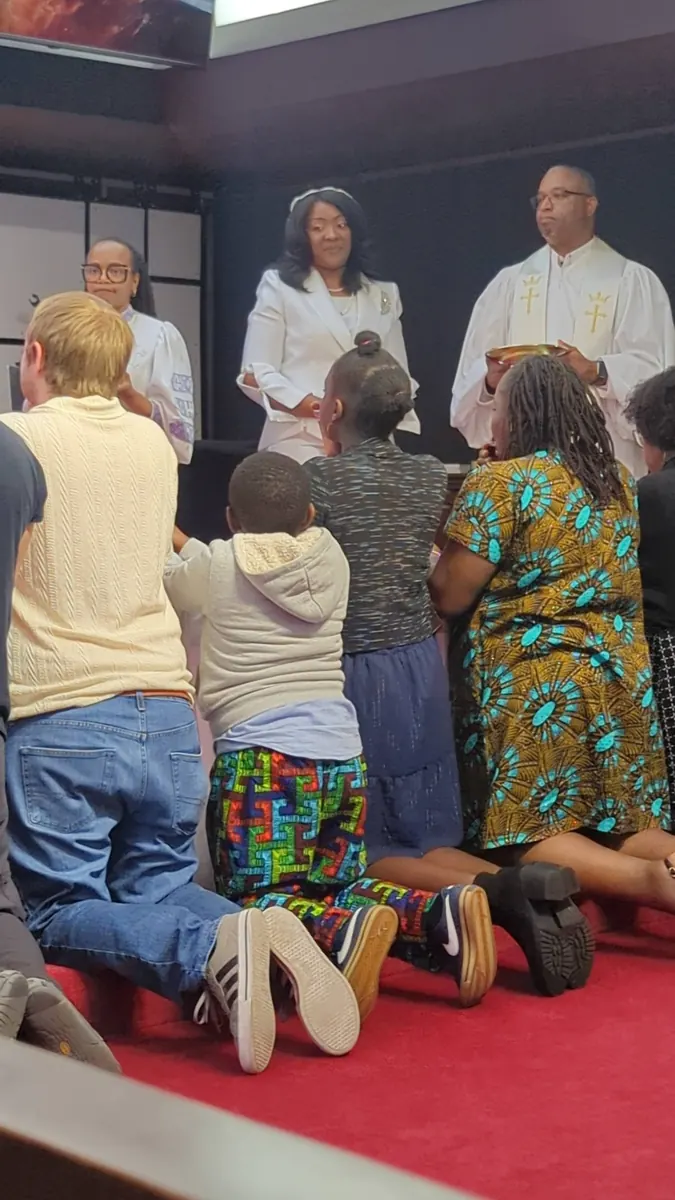
People kneel at the altar rail as others stand with them near the front of the sanctuary.

The short version

Most churches have a beliefs page that reads like a legal document. Ours is written for a person who wants a straight answer.

Here is the short version. Then the longer one. Then where all of it came from, because a faith with a history is a faith you can check.

What is at the heart of our faith?

  1. 01There is one God, known as Father, Son and Holy Spirit.
  2. 02Jesus is God with us. He lived, died and rose again, and that changed everything.
  3. 03Nobody earns their way in. Grace is a gift, and it is offered to everyone.
  4. 04You can know where you stand with God. Faith is not a guessing game.
  5. 05God's grace does not stop at forgiveness. It keeps working on you.
  6. 06The Bible is where we learn all of this, and it is enough.
  7. 07The church is people, not a building. And you belong here.

In fuller words

What do we teach about God and life?

These teachings come from Scripture and the Articles of Religion of the A.M.E. Zion Church. The references are here if you want to go deeper.

God, Jesus and the Holy Spirit

God

We believe in one living and true God. Not a force or an idea. A God of infinite power, wisdom and goodness, who made everything you can see and everything you can’t, and who holds it all together.

We know this one God as three persons: the Father, the Son and the Holy Spirit. Christians have said it this way for two thousand years, and so do we.

Articles of Religion I through IV, Book of Discipline ¶42 to ¶45

Jesus

Jesus Christ is fully God and fully human. He was born of Mary, lived a real life in a real body, and showed us what God is like.

He was crucified, died and was buried. He did that for us, to deal with sin once and for all. There is nothing left to add to what he did on the cross.

On the third day he rose from the dead, bodily. He is alive now, and he will come again.

Articles II, III and XX, Discipline ¶43, ¶44, ¶61

The Holy Spirit

The Holy Spirit is God, present with us now. The Spirit is not a feeling, though you may feel the Spirit’s work.

The Spirit does the things we cannot do for ourselves: opens our eyes, draws us to God, comforts us when we grieve, tells us the truth about ourselves, and gives us the strength to change. When something in you says “I want more than this,” that is the Spirit at work.

Article IV, Discipline ¶45

Scripture and people

The Bible

The Bible, Old Testament and New, is God’s Word. It contains everything you need to know to be saved. Nothing else is required of you as an article of faith.

We read it, preach it, study it in small groups, and expect it to change us. We also think hard about it. Methodists have never been afraid of questions. John Wesley said that on matters that do not strike at the root of Christianity, we think and let think.

Articles V and VI, Discipline ¶46 to ¶47

People, and what went wrong

Every person is made in the image of God. Every one. That is why each person, whatever their race, background or story, has a dignity nobody can take away.

And every person, left alone, drifts toward what is wrong. That is not a theory. You have felt it. We cannot fix ourselves by trying harder, and we cannot reach God by our own strength. That is exactly why grace matters.

Articles VII and VIII, Discipline ¶48 to ¶49

Grace and a changed life

Grace, for everyone

This is where Methodists sound different from some of our neighbors.

We believe Christ died for everyone. Not for a chosen few. God does not decide ahead of time who is in and who is out. The invitation is open, and the choice is real. Whosoever will may come.

Nobody has strayed too far. Nobody has sunk too low. If you are reading this and wondering whether that includes you, it does.

Know Your Church, chapter VII, “The Universality of Salvation”

How a person is saved

You are put right with God by trusting Jesus. Not by being good enough, not by your record, not by your effort. By faith alone. The Articles call this “a most wholesome doctrine and very full of comfort,” and it is.

It begins with repentance: an honest turning from what is wrong toward God. Then, at the same moment, two things happen. God forgives you, which is something done for you. And God makes you new on the inside, which is something done in you. Jesus called it being born again.

Good works come after. They do not save you. They are the evidence that something real has happened, the way you can tell a tree by its fruit.

And if you fall, you can get back up. Sin after you have come to faith is not the end of the story. Repent again. Grace is still there.

Articles IX, X and XII, Discipline ¶50 to ¶53

You can know

Methodists believe you can actually know that you are a child of God. Not hope so. Know.

John Wesley described it as the Spirit of God speaking directly to your spirit: that Jesus loved me and gave himself for me, that my sins are blotted out, and that I, even I, am reconciled to God.

That inner certainty is a normal part of Christian life, not a special experience for a few. If you have never had it, you can. Ask.

Know Your Church, chapter VII, “Witness of the Spirit”

Holiness, personal and public

Forgiveness is the beginning, not the finish. God’s grace keeps working, making us more like Jesus in what we think, say and do. Methodists call this holiness, and we believe it is meant for this life, not only the next.

And holiness is never private. John Wesley said the gospel knows no holiness but social holiness. Love for God and love for your neighbor are the same love. A church that got its start being shut out of a room has never been able to separate personal faith from public justice, and we don’t intend to start.

Know Your Church, chapter VII, “Holiness or Sanctification”

The church and what lasts

The church

The church is a gathering of people who trust Jesus, where God’s Word is preached and the sacraments are shared. That is the whole definition. Not a building, not a denomination, not a program.

It belongs to every age and every people. It is the body of Christ, and Jesus is its Lord. It is God’s gift for the healing of the world. And it is made of ordinary people, which is why it is never finished and always worth it.

Article XIII, Discipline ¶54

Judgment and eternal life

God is the just judge of all the earth. Every person and every nation answers to him, and his justice is perfectly fair.

Those who trust Christ share in the life of God, and that life does not end. Death is not the last word. Heaven is full communion with Jesus, and it begins now, not later.

Article III, Discipline ¶44

An open invitation

Who is grace for?

Everyone. We believe Christ died for everyone, not a chosen few. God does not decide in advance who is in and who is out. The invitation is open, and the choice is real. If you are wondering whether that includes you, it does.

The two sacraments · Articles XVI through XIX, Discipline ¶57 to ¶60 and ¶102 to ¶104

What are the sacraments?

Jesus commanded his followers to keep two practices: baptism and the Lord's Supper. We call them sacraments because they are not only symbols. They are real signs of grace, and God works through them.

01 / Baptism

What does baptism mean?

Baptism marks a person as belonging to Christ and to his church. It is a sign of new birth.

You choose how. Sprinkling, pouring or full immersion are all practiced here, and the choice is yours, because the point is what the Holy Spirit does, not how much water is used.

We baptize infants and children, as the church has from its earliest days. We hold that every child is already a member of God's kingdom because of what Christ has done, and baptism is the church's promise, with the parents, to raise that child in the faith. If you were baptized as a child, you do not need to be baptized again. One baptism is enough.

If you want to be baptized, or you want your child baptized, tell us on a Sunday or reach out through the website. We will sit down with you and walk you through it.

Ask about baptism
02 / The Lord's Supper

Who can come to the table?

Communion is a meal of bread and cup that Christians have shared since the night Jesus was betrayed. It is a sign of the love we have for each other, and much more than that. By faith, the bread we break is a sharing in the body of Christ, and the cup is a sharing in his blood.

You do not have to be a member of this church to receive. If you trust Jesus and want him, come. If you are not sure yet, you are welcome to come forward for a blessing.

Everyone receives both the bread and the cup. Always. You may kneel or stay seated.

See what Sunday is like

The story behind the faith

Where does this faith come from?

Nobody at UAMEZ made any of this up. Here is the line we stand in.

01 / ROOTS

Jesus and the apostles

Our beliefs come from the teaching of Jesus and the apostles, as the New Testament records them, and from the best of two thousand years of Christian experience. We share that heritage with Christians of every age and every nation.

02 / ROOTS

The Reformation and the Church of England

In the 1500s, the Reformation put the Bible back in the hands of ordinary people and put faith, not works, back at the center. The Church of England summed up its faith in Thirty-Nine Articles. When Methodists organized, they kept twenty-five of them. Those twenty-five Articles of Religion are still our doctrinal standard today, and our church constitution does not allow them to be changed.

03 / ROOTS

John Wesley, 1739

In London in 1739, a small group came to John Wesley, a priest in the Church of England, asking him to help them flee from the wrath to come and be saved from their sins. He began meeting with them every week to pray and to watch over one another in love. That was the start of the Methodist movement. Wesley’s people were called Methodists because they were methodical about it: small groups that met weekly, honest accountability, a life of doing no harm, doing good, and staying close to God through worship, Scripture, prayer, communion and fasting. Those are still the General Rules of our church. There was only ever one condition for joining: a desire to be saved. Wesley wrote that wherever that desire is real, it will show by its fruit.

04 / ROOTS

Methodism in America

Methodism crossed the Atlantic in the 1760s and took root in New York. In 1784 it became a church of its own, the Methodist Episcopal Church. “Episcopal” means led by bishops. That form of church government, with bishops who appoint pastors and conferences where clergy and laypeople decide together, is still ours.

05 / ROOTS

1796: the Freedom Church

Black Methodists in New York worshipped at John Street Methodist Church. They were converted there, and they were also segregated there, kept from preaching and from full participation. In 1796, a group of them, led by James Varick, Abraham Thompson, June Scott, Peter Williams and others, organized their own congregation with the permission of Bishop Francis Asbury. They named it Zion. They kept the doctrine, the discipline and the polity of the Methodist Church. What they left behind was the bigotry. In 1820 the church adopted its own Book of Discipline and stopped depending on the white church for its ministers. In 1821 it held its first annual conference. In 1822 James Varick was elected its first bishop. The African Methodist Episcopal Zion Church was born.

Our Discipline says our founders believed God had called them out of bondage and chosen them to be a channel of his redeeming love for all people. That is not our history alone. It is our theology.

The A.M.E. Zion Church earned the name the Freedom Church in the fight against slavery. Frederick Douglass joined an A.M.E. Zion church in New Bedford, Massachusetts, in 1838 and was licensed to preach the next year. Sojourner Truth and Harriet Tubman were members. Our pulpits and basements were stations on the road to freedom, and the church has stood for freedom, dignity and justice ever since.

06 / ROOTS

Palo Alto, 1918

In 1918, a handful of Black families in Palo Alto organized a congregation of their own in a city that did not always make room for them. They built a church on Ramona Street, then a new sanctuary on Middlefield Road, where we still worship. Everything above is what they carried with them. It is what we carry now.

07 / ROOTS

Today

We are a historically Black, multicultural church. Kids, students, engineers, families, longtime Palo Alto families, people who grew up in church and people who never set foot in one. Same beliefs. Same table.

Faith in practice

What are we here for?

The Book of Discipline states the mission of the A.M.E. Zion Church as increasing our love for God and helping meet the needs of humankind by loving God with all our heart, soul and mind, and loving our neighbor as ourselves. It says we share in the mission of Jesus: healing the sick, opening blind eyes, setting the oppressed free, and preaching good news to the poor.

At UAMEZ, that mission sounds like this: we are a Christian church serving Palo Alto, Silicon Valley and the Bay Area by helping people experience the life-changing love of Jesus. We create space for belonging, real relationships and spiritual growth.

Reach. Care. Grow.

Faith questions people ask today

What questions of faith do people ask?

Twenty-three answers to questions people in Silicon Valley ask about God, written for readers who are new to Christianity.

By Kaloma Smith ·

Choose a question to read the answer.

01 / Questions of Faith

Most-searched nationally

Who created God?

Nobody did. Christians believe God was never created. Everything that begins needs something to start it, and God never began. UAMEZ Church believes in one living and true God of infinite power, wisdom and goodness, the maker of everything you can see and everything you can't. We know this one God as three persons, the Father, the Son and the Holy Spirit, of one substance, power and eternity. None of the three was made, and none came first.

Is there a God?

Yes. UAMEZ Church believes in one living and true God. Not a force or an idea, but a God of infinite power, wisdom and goodness, who made everything you can see and everything you can't and holds it all together.

Why does God allow suffering?

UAMEZ Church believes God does not stand outside human suffering. God came himself, as Jesus, lived a real life in a real body, and was crucified. God has suffered too. The Holy Spirit comforts us when we grieve, and death is not the last word.

Is Jesus really God?

Yes. UAMEZ Church believes Jesus Christ is fully God and fully human. He is the Son, one of the three persons of the triune God: Father, Son and Holy Spirit, one God of one substance, power and eternity. He was born of Mary, lived a real life, died, and rose bodily on the third day. "Christ" is not his last name. It is a title meaning the one God promised to send. Christians believe Jesus was God, living a human life, and that in him we see what God is like. This is Articles II, III and XX of the Articles of Religion.

Is the Bible true?

UAMEZ Church believes the Bible, Old Testament and New, is God's Word and contains everything a person needs to know to be saved. Nothing outside it is required of anyone as an article of faith (Articles V and VI). We read it, preach it, study it in small groups, and expect it to change us.

Can I know God personally?

Yes, and you can know that you do. Christians call this the witness of the Spirit: God's Spirit speaking directly to your spirit that Jesus loved you and gave himself for you, and that you are reconciled to God. UAMEZ Church teaches that this is a normal part of Christian life, not a rare experience for a few. The Holy Spirit is God at work in a person now, not at a distance.

Does my life have a purpose?

Yes. UAMEZ Church believes every person is made in the image of God, every one, and has a dignity nobody can take away. Your purpose starts with being loved by God and then loving God and your neighbor in return. Jesus summed up the whole of faith as loving God with all your heart, soul and mind, and loving your neighbor as yourself. At UAMEZ we say it in three words: Reach. Care. Grow.

Why did God make me look like this?

Because you are made in the image of God, and nothing about how you look is a mistake or a punishment. UAMEZ Church believes every person, whatever their race, background or story, has a dignity nobody can take away.

02 / Questions of Faith

What Silicon Valley thinkers ask

Are faith and reason compatible?

Yes. UAMEZ Church believes faith asks for trust, not for you to switch your mind off. Every belief on the What We Believe page is tied to the document it comes from, so it can be checked. On matters that do not strike at the root of Christianity, we think and let think.

What do I do with my doubts? Can I ask hard questions at church without being judged?

Bring them. At UAMEZ Church you can ask hard questions without being judged. Doubt is not the opposite of faith, and nobody will quiz you at the door. On matters that do not strike at the root of Christianity, we think and let think. There is room here for a person who is still working it out.

Are miracles possible?

UAMEZ Church believes they are, because we believe in a God who made everything and still holds it all together. Our faith rests on the biggest miracle there is, that Jesus rose bodily from the dead. We also believe God works through ordinary things, like water at a baptism or bread and cup at communion. As Pastor Smith puts it, church is the only place we can see miracles happen on a regular basis.

What is the evidence for the resurrection?

UAMEZ Church believes Jesus rose bodily from the dead on the third day. That belief rests on the testimony of people who said they saw him alive. The New Testament names many of those witnesses, and Paul writes that most of the more than five hundred people who saw him at one time were still alive when he wrote (1 Corinthians 15:6). The first Christians had nothing to gain by inventing it and a great deal to lose.

What does it actually mean to believe?

To believe, in the Christian sense, is to trust Jesus, not just to agree with a list of statements. UAMEZ Church teaches that a person is put right with God by trusting him, not by being good enough or by their record. It starts with repentance, an honest turn toward God. Faith is a relationship, not a transaction.

03 / Questions of Faith

Tech, AI, and work

What does AI mean for being human?

UAMEZ Church believes a person's worth doesn't come from what they can produce, so a machine that produces more can't lower it. Every person is made in the image of God and has a dignity nobody can take away. That is true of you whether or not a model can do your job. You are loved by God, and you are not doing this alone.

Should a Christian build AI, and how?

Yes, and how it is built matters. UAMEZ Church teaches three simple rules for a whole life: do no harm, do good, and stay close to God. They apply to code as much as anything. Christian faith is never only private. It shows up in what you build and who it serves. Love for God and love for your neighbor are the same love.

Is my work my worth?

No. UAMEZ Church believes grace is God's kindness toward you that you didn't earn and can't lose by falling short. It is a gift, not a wage. You don't get more of it by being impressive, and you don't get less of it by failing. Your worth was settled before your first performance review and will outlast your last one.

What is my calling?

Your first calling is the same as everyone's: to love God with all your heart, soul and mind, and to love your neighbor as yourself. Jesus called it the greatest commandment. Everything else, including your job, your family and the work you take on, is where that calling gets lived out. Our church says it in three words: Reach. Care. Grow.

Can I be openly Christian at work?

Yes, and the most convincing way is usually how you treat people, not what you say about it. UAMEZ Church believes faith is never only private. Love for God shows up as love for your neighbor. The church teaches three simple rules for life: do no harm, do good, and stay close to God. You don't have to hide your faith, and you don't have to perform it.

04 / Questions of Faith

Gen Z and young adults

Can I follow Jesus without going to church?

You can trust Jesus anywhere, but following him was never meant to be done alone. UAMEZ Church believes the church is people, not a building. It is a gathering of people who trust Jesus. From the very beginning, Christians met together to pray, share meals and look after one another.

Who decides what's right and wrong?

God does, and UAMEZ Church believes the Bible is where we learn it. God is the just judge of all the earth, and his justice is perfectly fair. Every person feels the pull toward what damages us and the people around us. That is what Christians mean by sin. Love for God and love for your neighbor are the same love, and that is the measure.

Does prayer actually do anything?

UAMEZ Church believes it does, because prayer is talking with a God who is actually there and actually listening. Prayer is one of the oldest Christian practices, alongside worship, Scripture, communion and fasting. The Holy Spirit is God at work in a person now, and prayer is often where you notice it, as a nudge, as comfort, or as the sense that you are not doing this alone.

05 / Questions of Faith

Families and the end of life

How do I raise kids with faith in a place this competitive?

Teach them that their worth isn't earned. UAMEZ Church believes grace is a gift. Nobody gets more of it by being impressive or less of it by failing. When we baptize a child, the whole church makes a promise, together with the parents, to raise that child in the faith. Parents are not meant to do this alone.

What happens when I die?

UAMEZ Church believes death is not the last word. Those who trust Christ share in the life of God, and that life doesn't end. Heaven is full communion with Jesus, and it begins now, not later. God is the just judge of all the earth, and his justice is perfectly fair. The door is open, and Christ died for everyone.

Good questions welcome

What do people ask about our beliefs?

You can ask these questions in person, too. There is room to listen and learn.

Do I have to believe all of this to visit?

No. Come as you are, with your questions. Nobody will quiz you at the door. This page exists so you can see what we teach, not so we can screen who comes in.

What does A.M.E. Zion stand for?

African Methodist Episcopal Zion. African, because the church was founded by Black Americans in 1796. Methodist, for our doctrine and way of life. Episcopal, because we are led by bishops. Zion, the name of the founding congregation in New York City.

Is UAMEZ Church the same as the AME Church?

No. We are related but separate. The A.M.E. Zion Church began in New York in 1796. The A.M.E. Church began in Philadelphia. Both are Black Methodist denominations with the same core beliefs, but they have been separate churches for more than two hundred years.

Are you a Methodist church?

Yes. We hold the same Articles of Religion and General Rules that go back to John Wesley. If you grew up United Methodist, you will recognize almost everything.

Is UAMEZ a Black church?

We are a historically Black church, founded in 1918 by Black families in Palo Alto, in a denomination founded by Black Americans in 1796. Today we are also a multicultural church. Both are true, on purpose.

Do you baptize babies?

Yes. We baptize infants, children and adults. For anyone being baptized, or for the parents of a child, the choice of sprinkling, pouring or immersion is yours.

I was baptized in another church. Do I have to be baptized again?

No. One baptism is enough. We recognize your baptism.

Can I take communion if I’m not a member?

Yes. Communion at UAMEZ is open to anyone who trusts Jesus. Everyone receives both bread and cup. If you are not sure where you stand, come forward for a blessing.

What Bible do you use?

We believe the whole Bible, Old and New Testament, is God’s Word and contains everything needed for salvation. You will hear it read and preached every Sunday from the New Revised Standard Version Updated Edition (NRSVue). You are welcome to bring any translation you like.

Where can I read the full Articles of Religion?

They are in the Book of Discipline of the A.M.E. Zion Church, Articles I through XXV. Ask any Sunday and we will get you a copy.

Come see faith in community

Is there a place for me here?

You have read what we believe. Now come see what it looks like on a Sunday.

Sundays at 10:00 AM. 3549 Middlefield Road, Palo Alto.