
Blog
Love Beyond the Pain: Understanding Grace That Changes Everything
· 5 min read
People get canceled faster than forgiven. Romans 5:8 says Christ died for us while we were still sinners. Grace that meets you in the dark, in three movements.
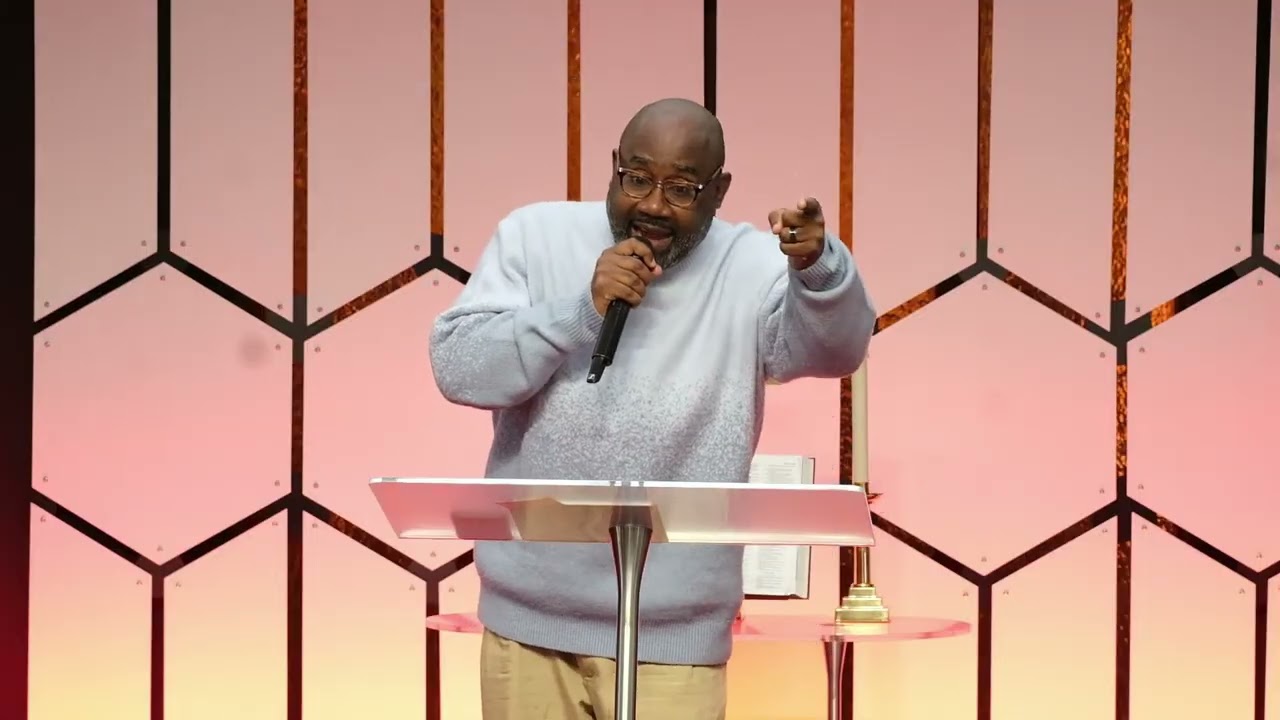
Sermon from Sunday, November 16, 2025 · Romans 5:8 · Essential in the Faith series
Watch the videoOpens in a new tabWe have reached a place where judgment is the normal move.
People get canceled faster than they get forgiven. Criticized before they get cared for. Judged before they are understood. Labeled before they are loved. People are hurting in private and getting dragged in public. You do not need a degree from Stanford to know it. You feel it in your DMs, your notifications, your performance review, the parent-teacher night where every parent looks stressed out.
We live in a place with numbers for everything and mercy for very little.
Into all of that, one verse. Romans 5:8: “But God shows his love for us in that while we were still sinners, Christ died for us.” I could preach a year on that one sentence.
Do not judge the day by the darkness
Somebody in my house is up at 5:30 every morning. My youngest has just learned to talk, and he is just tall enough to reach the light switch. He walks into my room on his tiptoes, hits the switch, and says, “Let’s play.”
So I made a rule for the boys. We cannot move until you see the sunlight. The day does not begin until the light comes in.
That spoke to me. My children wanted to start the day in the dark, and a lot of us are living that way spiritually. Life shook you awake in the dark. Trauma, heartbreak, anxiety, betrayal, church hurt. The pain came before the light, and now you are living your whole life as if the dark is the day.
You do not judge the day by the darkness. You judge it by the light that is coming. Grace is God’s sunlight breaking into your early morning. Grace says the night is not your final chapter.
One verse, six phrases
Paul wrote Romans from Corinth to a church he had never visited. There is no story in Romans. There are truths. And chapter 5 is the hinge, where the book shifts from what sin does to us to what grace does for us and in us.
But God. Every time I read those two words, I know it does not matter what happened before them. God stepped in before I improved, before I fixed anything. God moved first.
Shows. The Greek means keeps demonstrating. Not an emotional moment. Steady, constant, visible. God is saying, if you ever doubt my love, look at what I have already shown you and what I am still showing you.
His own love. This love does not start with us or rise and fall with our behavior. John Wesley said it best: God’s love is the source, not the response.
For us. Not for the world in the abstract. For the overwhelmed parent. The anxious student. The burned-out tech worker. The Black family facing injustice. The person unsure about faith, the one hurt by a church, the one hiding shame. God loves you by name.
While we were still sinners. Not after you changed. Not after you memorized Psalm 23 or joined a ministry or got your church clothes together. While you were running, broken, confused, inconsistent. God’s love does not find us holy. God’s love makes us holy.
Christ died for us. He took our place. He bore our judgment. If Jesus had waited for us to be worthy, none of us would be here. His love did not check my résumé. It did not ask for references. It saw me and came my way.
Three movements of grace
One of the things I love about the Methodist tradition is how it talks about grace. Not one moment. Three movements.
Prevenient grace is the grace that got to you first. God working in your life before you knew God was working. God pursued you before you noticed him and whispered before you ever prayed. It is the softening of a heart, the waking of a spirit. Alcoholics Anonymous calls it a moment of clarity. So many of us came to a service where we did not plan to stand up or walk forward, and something compelled us. That was grace speaking before we knew we needed it.
Justifying grace is the grace that makes you right with God. Wesley called it what God does for us. It pardons your sin, removes your guilt, and repairs the relationship. You stood guilty and Christ stepped in. You stood condemned and Christ carried it. You cannot earn it. You receive it by faith.
Sanctifying grace is the grace that changes you from the inside out. Wesley called it what God does in us. This is the part American Christianity tends to skip. We get people to the baptismal pool, and then what?
I used to read that we become a new creation in Christ and wonder if that meant I would finally be tall enough to play basketball. God never answered that one. But he started doing something inside me. He healed some deep wounds. He reshaped my desires. My favorite thing to do now is go home. He strengthened my character, gave me a conscience that will not let the white lies slide, and started breaking patterns I inherited.
I grew up in a legalistic church, and it always puzzled me that the rules seemed to fall on the women. That is not what this is. Sanctification is not legalism, perfectionism, behavior management, or religious performance. You do not have to shout at the right moment. It is the Holy Spirit changing you at the root, and it is a long-term project. The issues in my soul at 28, when I came back to Jesus, are not the issues I deal with today. God is not in the business of making you perfect. He is in the lifetime project of perfecting you.
Bringing it home
This is for the student at Stanford. The Gen Z reader in the anxious generation. The young Black and brown family trying to survive Silicon Valley. The parent who feels like they are failing. The tech worker crushed by performance culture. The one healing from church hurt. Grace is coming toward you today.
If you are searching, you are not here by accident. That desire for God, for healing, for restoration is not self-generated. It is grace calling your name.
Some of you walked in carrying shame from last night, guilt from last year, wounds from childhood, secrets you pray no one discovers. The devil whispers, you are too far gone. Justifying grace answers: while you were still. Not after you healed. While. God already crossed the distance in Christ.
And you are not stuck. You are in process. Grace starts the story. Jesus secures the story. The Spirit shapes the story.
When I read Romans 5:8, I do not just see theology. I see testimony. But God, when loneliness had me. But God, when depression had me. But God, when shame tried to bury me. But God, when church hurt tried to break me. He loved me in my while.
This week
You do not fix yourself first. You do not clean yourself up. You receive.
If something in you is saying, I need God, I want a new start, pray this: Jesus, I believe you love me. I believe you died for me while I was still broken. Forgive my sins, heal my heart, make me new. I receive your grace. Thank you for loving me beyond the pain.
Then sit with these:
Which movement of grace do I need to hear most right now: that God moved first, that I am forgiven, or that I am not stuck?
Where am I still judging the day by the darkness?
Who in my life is getting judged before they are understood, and how could I offer mercy instead?
See you Sunday.
Pastor Kaloma Smith